
BOT X / Journal
Humanoid Robots in Manufacturing: Applications, Benefits and Challenges
November 3, 2026Humanoid robots are moving beyond research labs and entering industrial environments. Explore their applications in manufacturing, potential benefits, and the challenges that must be addressed before large-scale adoption.
Manufacturing is entering a new phase of automation. Traditional industrial robots have transformed production lines through speed, precision, and repeatability. Now, a new generation of intelligent machines is attracting attention: humanoid robots.
Designed around a human-like structure, these robots combine cameras, sensors, robotic hands, mobility systems, and artificial intelligence to interact with their surroundings. Their biggest potential advantage is their ability to operate in environments originally designed for people.
But can humanoid robots actually become a practical part of everyday manufacturing? Let's explore.
Why Are Manufacturers Interested in Humanoid Robots?
Most factories are already equipped with workstations, tools, storage systems, and production equipment designed for human workers.
Introducing conventional automation often requires changes to the factory layout, dedicated infrastructure, and specialized equipment.
Humanoid robots offer a different approach. Their human-like form could allow them to navigate existing workspaces, operate certain tools, move materials, and perform tasks without completely redesigning the production environment.
Combined with advances in physical AI, these machines are being developed to perceive their surroundings, make decisions, and perform physical actions.
Key Applications of Humanoid Robots in Manufacturing
1. Material Handling
Moving components, containers, and materials between workstations is a repetitive activity in manufacturing. Humanoid robots could support these operations by picking up objects, transporting them, and placing them at designated locations.
2. Machine Tending
Humanoid robots may eventually assist with loading and unloading machines, handling components, and carrying out repetitive operations around production equipment.
This could be particularly useful in facilities where workstations are designed for human interaction.
3. Quality Inspection
Equipped with cameras and AI-based vision systems, humanoid robots can potentially inspect products, identify visible defects, and report abnormalities.
Their mobility could also help them inspect multiple areas of a production facility.
4. Warehouse and Intralogistics
Factories depend on the continuous movement of materials. Humanoid robots could support picking, sorting, transportation, and inventory-related activities.
However, dedicated autonomous mobile robots may remain more economical for many structured transportation tasks.
5. Repetitive and Physically Demanding Tasks
Tasks involving repetitive movements, routine handling, or physically demanding operations could become potential applications for humanoid robotics.
The objective is not simply to replace human workers, but to improve operational efficiency and reduce exposure to physically demanding or potentially hazardous activities.
The Role of Physical AI
Physical AI is one of the technologies driving the development of intelligent robots.
Unlike conventional automation, which often depends on predefined instructions, physical AI aims to help robots understand their surroundings and respond to changing conditions.
It brings together:
- Computer Vision: Enables robots to identify objects, people, and obstacles.
- Machine Learning: Helps robots improve task execution through training and experience.
- Motion Planning: Allows robots to determine how to move and interact with objects.
- Sensor Fusion: Combines information from cameras, force sensors, and other hardware.
- Foundation Models: Help connect perception, reasoning, and physical actions.
Together, these technologies are helping robots move towards more adaptable real-world operations.
Challenges That Need to Be Solved
Despite rapid progress, humanoid robots are not yet ready for widespread deployment across every manufacturing process.
Several challenges remain:
Dexterity: Replicating the flexibility and precision of human hands remains difficult, particularly when handling different shapes and delicate components.
Reliability: Industrial environments require consistent performance, high uptime, and predictable operation across long working shifts.
Safety: Robots operating near people must meet strict safety requirements and respond reliably to unexpected situations.
Battery Life: Operating time, charging requirements, and energy consumption affect the economic viability of mobile humanoid robots.
Integration Costs: Connecting robots with existing production equipment, software, and factory workflows can be complex.
Return on Investment: Manufacturers must evaluate whether a humanoid robot delivers better productivity and operating economics than conventional automation.
Are Humanoid Robots Ready for Factory Deployment?
The answer depends on the application.
Humanoid robots are progressing through pilot projects and early industrial trials, but widespread adoption remains a work in progress.
In January 2026, Gartner projected that fewer than 20 companies would take humanoid robots into production for manufacturing and supply chain applications by 2028. Research from Fraunhofer IML also highlights the remaining challenges around handling, robustness, safety, and integration.
This suggests that manufacturers should focus on specific use cases rather than adopting humanoid robots simply because the technology is attracting attention.
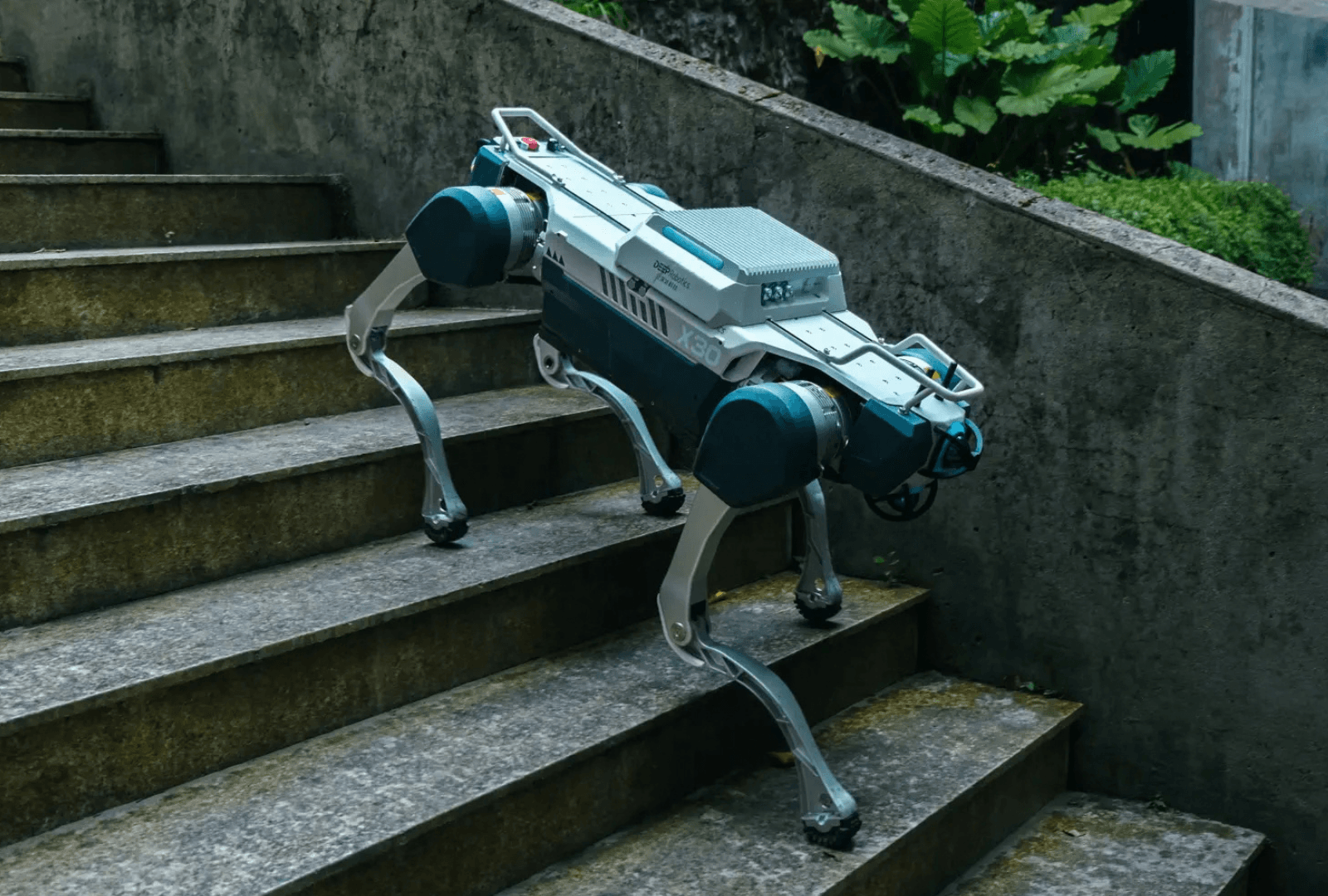
For many operations, a conventional industrial robot, robotic arm, autonomous mobile robot, or quadruped may still be the more practical solution.
What Does the Future Look Like?
The future of manufacturing automation is unlikely to depend on one type of robot.
Instead, factories may use a combination of industrial robotic arms, autonomous mobile robots, humanoids, machine vision systems, and intelligent software platforms.
As hardware becomes more capable and AI systems improve, humanoid robots could gradually take on a wider range of tasks.
The key will be finding applications where their flexibility offers a genuine operational advantage.
Final Thoughts
Humanoid robots represent an exciting development in industrial automation, but their commercial success will depend on more than appearance or technological sophistication.
Reliability, safety, task performance, integration, and measurable return on investment will determine where they make sense.
For manufacturers, the opportunity is not to automate everything with humanoids. It is to identify the right technology for the right task.
Explore the world of robotics and physical AI with BOT X — Buy, Code, Sell, Rent, Repair, and Service.